

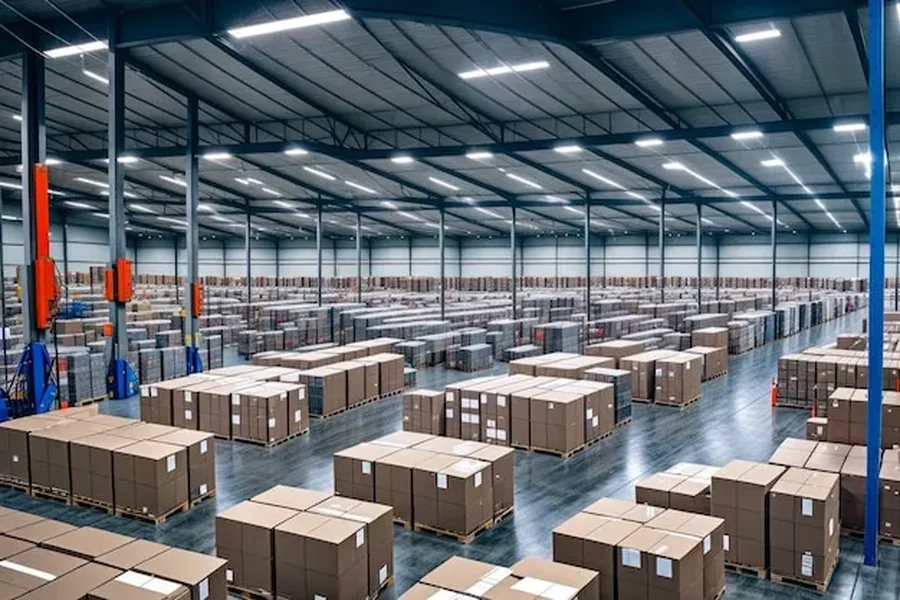
Product distribution has undergone significant evolution over the past few decades, driven by globalization, digital transformation, consumer demand for faster delivery, and increasing operational complexities. While the fundamentals remain rooted in getting products from manufacturers to end-users, modern-day distribution is facing a range of strategic and operational challenges that businesses cannot afford to overlook.
1. Rising Expectations Around Speed and Transparency
Consumers today want not just faster deliveries but complete visibility into the process. This is as true for B2C orders as it is for B2B shipments. Real-time tracking, precise estimated delivery times, and proactive communication are now standard.
This has put pressure on distribution networks to become leaner and more responsive, often requiring:
- Multiple fulfillment centers closer to demand hotspots.
- Integration of tracking systems across all carriers.
- Coordination between inventory and last-mile logistics.
Without these capabilities, businesses risk falling short of customer expectations and losing out to more agile competitors.
2. Managing Inventory Across Multiple Locations
Gone are the days when a single warehouse could serve an entire region. To cut down transit times, businesses now operate multiple distribution centers. While this can reduce delivery windows, it significantly increases complexity.
Challenges include:
- Maintaining optimal inventory levels across sites.
- Avoiding overstocking or stockouts.
- Coordinating inter-warehouse transfers without added costs.
Inventory mismanagement at any location can quickly disrupt the distribution process and harm customer satisfaction. Businesses must invest in centralized inventory management systems that offer real-time data and predictive capabilities.
3. Labour Shortages and Workforce Challenges
Another persistent problem is the shortage of skilled labour in warehousing, packaging, and transportation. Seasonal spikes in demand exacerbate the issue.
Automation can help bridge this gap, but it’s not an overnight solution. Robotics, autonomous vehicles, and AI-based planning tools can reduce manual work; however, they also require significant capital investment and workforce reskilling.
Companies that fail to address labour dependencies may face delays, inaccuracies in fulfillment, and rising labour costs over time.
4. Adapting to Technological Shifts
Technological innovation is both a solution and a challenge.
Key technological changes include:
- Use of AI and machine learning for demand forecasting.
- Blockchain for tracking shipments and verifying authenticity.
- IoT for real-time tracking of shipments and assets.
- Integration with e-commerce platforms and marketplaces.
Implementing these tools without disrupting ongoing operations or exceeding budgets is a tough balancing act, especially for mid-sized businesses.
In today’s digital age, tracking parcels has become an essential feature for both businesses and individual users who rely on delivery services. It provides peace of mind by allowing customers to monitor the exact status and location of their shipments in real time. Whether you are waiting for an important document or an online order, having access to accurate tracking information helps reduce uncertainty and improves the overall delivery experience. If you want to easily monitor your shipments, you can use the ตามพัสดุ service to check the current status of your parcel anytime. This system is designed to be simple and user-friendly, ensuring that anyone can quickly find updates by entering a tracking number. With reliable tracking tools, users can plan better, avoid delays, and stay informed throughout the entire delivery process, making shipping services more transparent, efficient, and convenient for everyone involved in the process.
5. Transportation Disruptions and Carrier Dependence
The transportation component of distribution is extremely vulnerable to disruptions, ranging from fuel price hikes to regulatory bottlenecks and extreme weather events. Furthermore, overreliance on specific carriers or routes increases risk exposure.
Recent global events have underscored the fragility of interconnected logistics. Border restrictions, port congestion, and container shortages have disrupted timelines and driven up freight rates across various markets.
To stay resilient, companies need to:
- Diversify carriers and transport modes.
- Invest in route optimization tools.
- Build contingency plans for time-sensitive shipments.
6. Regulatory Complexity and Cross-Border Compliance
Distributing products internationally brings a new layer of complexity. From export documentation to customs regulations and product labeling standards, compliance is both time-consuming and critical.
Each country may have its own set of:
- Import duties and tariffs.
- Labelling requirements.
- Packaging standards.
- Environmental regulations.
Failure to comply can result in fines, shipment delays, or even loss of inventory. Businesses need strong legal and logistics support to navigate this environment smoothly.
7. Sustainability Pressures from Consumers and Stakeholders
Environmental sustainability is no longer a niche concern; it has become a global imperative. Customers and investors increasingly demand that product-based businesses reduce their environmental impact throughout the distribution process.
Common sustainability goals include:
- Reducing carbon emissions from transportation.
- Eliminating excess packaging.
- Implementing energy-efficient warehouse systems.
Meeting these targets often requires a complete reevaluation of distribution strategy, from localizing fulfillment to selecting eco-friendly carriers and adopting circular logistics.
8. Visibility and Control in a Fragmented Supply Chain
With many companies outsourcing parts of their distribution to third-party logistics (3PL) providers, maintaining full control and visibility becomes difficult.
This can lead to:
- Delays in receiving updates.
- Miscommunication between vendors.
- Loss of accountability in the case of issues.
Businesses must prioritize partners who offer real-time data sharing, digital dashboards, and performance guarantees. Transparent collaboration is crucial to maintaining quality and trust in a fragmented system.
9. Balancing Flexibility with Cost Management
Perhaps the biggest overarching challenge is striking the right balance between operational flexibility and cost efficiency. Expanding distribution networks, offering same-day delivery, and implementing digital tools are all desirable, but they come at a price.
The key is to focus on scalable solutions that offer long-term returns. For example, using demand forecasting to position inventory can reduce transportation needs without inflating warehousing expenses. Similarly, predictive analytics can help avoid disruptions while lowering inventory carrying costs.
It’s here that the impact of supply chain cost becomes most apparent, as businesses must continuously weigh efficiency gains against margin pressures.
10. Preparing for the Unknown: Disruption-Ready Distribution
If recent years have taught us anything, it’s that unforeseen events, from pandemics to geopolitical tensions, can quickly disrupt distribution networks.
To prepare for the unknown, businesses must:
- Build distribution redundancies (multiple suppliers and transport routes).
- Use data analytics to simulate disruption scenarios.
- Establish backup carriers and contingency shipping agreements.
- Maintain agile contract terms with logistics providers.
The goal is to create a distribution system that can pivot quickly, minimize delays, and ensure business continuity under different risk conditions.
Conclusion
Modern-day product distribution is a complex and ever-evolving challenge. Businesses must navigate a landscape that demands speed, efficiency, compliance, and sustainability, all while maintaining cost-effectiveness. By addressing key bottlenecks and investing in the right technologies and partnerships, companies can future-proof their distribution strategies and deliver better customer outcomes.
